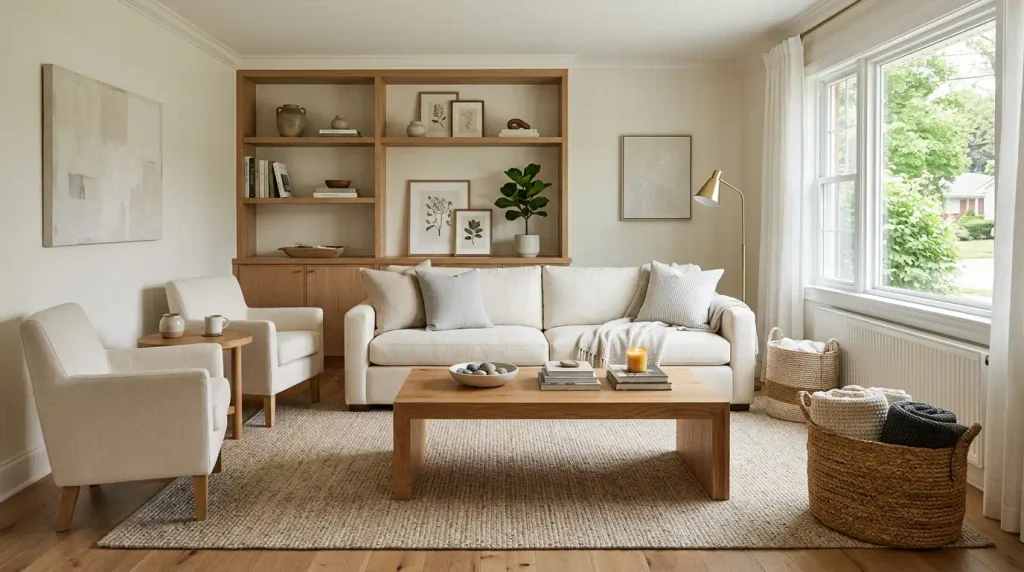

Whether you live in a modern apartment, suburban house, farmhouse, or small American home, simple decorating changes can make a big difference.
Soft textures, warm lighting, comfortable furniture, natural materials, and thoughtful accessories can instantly improve the atmosphere.
You do not need a huge budget or a complete renovation to create a stylish and comfortable home.
Small additions such as layered blankets, textured pillows, area rugs, candles, and indoor plants can add plenty of character.
A cozy home should also be functional, especially for busy everyday life.
The following cozy home ideas combine comfort and style while remaining practical for a variety of American homes.
Use these ideas as inspiration to create a living space where you can truly relax and enjoy spending time.
1. Layer Soft Throw Blankets
Soft throw blankets are one of the easiest ways to make a room feel cozy. Place a chunky knit blanket over the arm or back of your sofa for an inviting appearance. Choose neutral colors such as cream, beige, taupe, or soft gray for a timeless look. You can also mix different blanket textures to create visual interest. A lightweight cotton throw works well during warmer months, while chunky wool or fleece is ideal for winter. Keep a basket nearby so extra blankets are easy to reach. Layering blankets also makes an otherwise simple sofa look more luxurious. Choose materials that feel pleasant against the skin for maximum comfort. Avoid overcrowding the furniture with too many throws. The goal is to create a relaxed and naturally lived-in atmosphere.
2. Add a Warm Neutral Area Rug
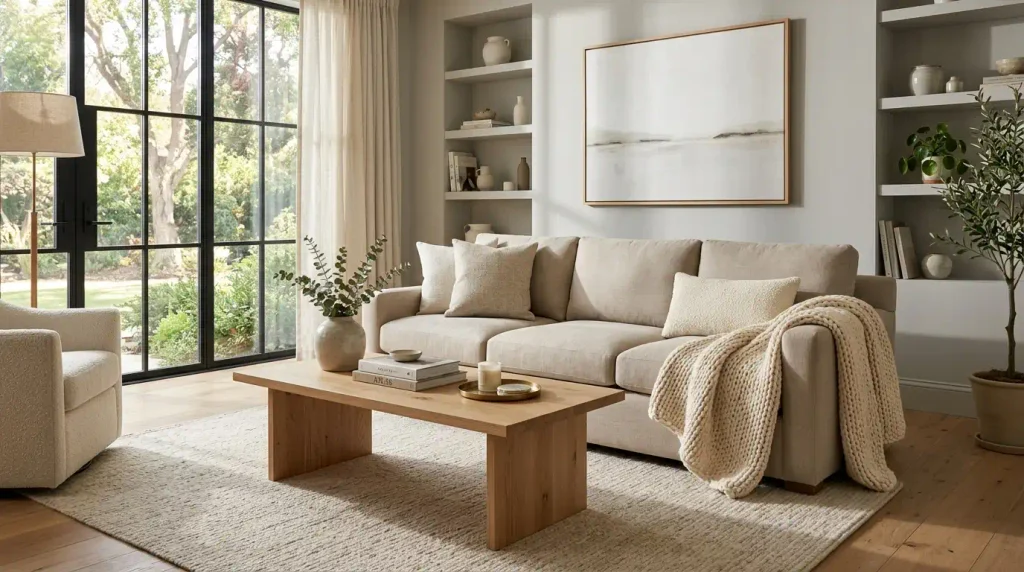
An area rug can instantly make a living room feel warmer and more comfortable. Choose a rug large enough to visually connect the main furniture pieces. Neutral shades work particularly well because they complement both traditional and modern interiors. Cream, beige, ivory, and light brown are popular choices for cozy American homes. A textured rug can add depth without overwhelming the room. Place the front legs of the sofa and chairs on the rug for a cohesive arrangement. Soft rugs also make hardwood, laminate, and tile floors feel more comfortable underfoot. For families, consider a durable and easy-to-clean rug. Layering a smaller patterned rug over a larger neutral rug can create additional visual interest. Keep the overall pattern subtle so the room remains relaxing.
3. Create a Cozy Reading Corner
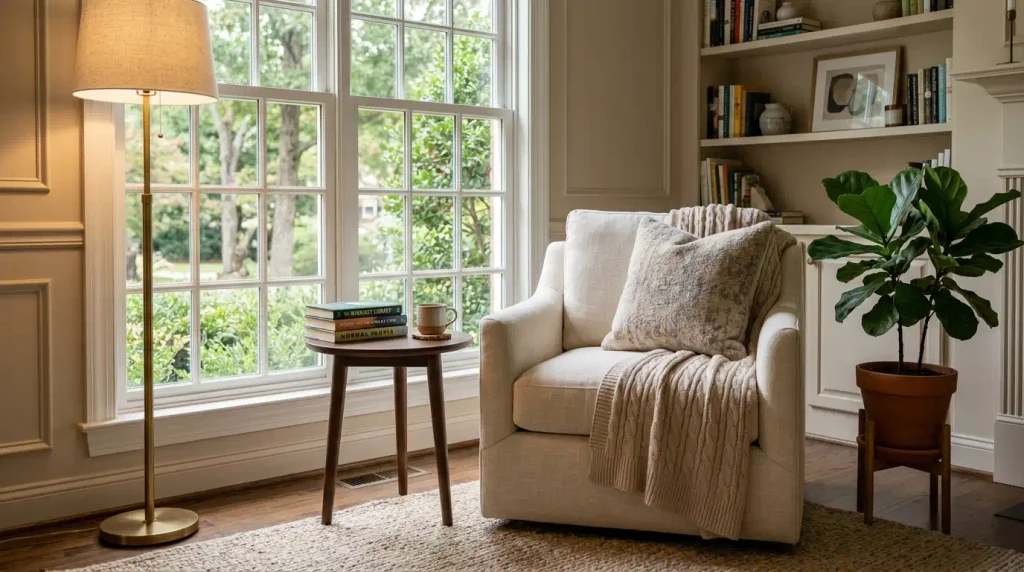
A dedicated reading corner can turn an unused area into one of the most relaxing parts of your home. Start with a comfortable armchair positioned near a window or floor lamp. Add a small side table for books, tea, or decorative objects. A soft throw blanket can make the chair look even more inviting. Choose warm wood furniture to bring a natural element into the space. A small indoor plant can add freshness and color. Use a floor lamp with warm-toned lighting rather than harsh overhead illumination. Keep a few favorite books nearby for convenience. A small rug underneath the chair can visually define the reading zone. Even a compact corner can become a beautiful and functional retreat.
4. Use Warm Ambient Lighting
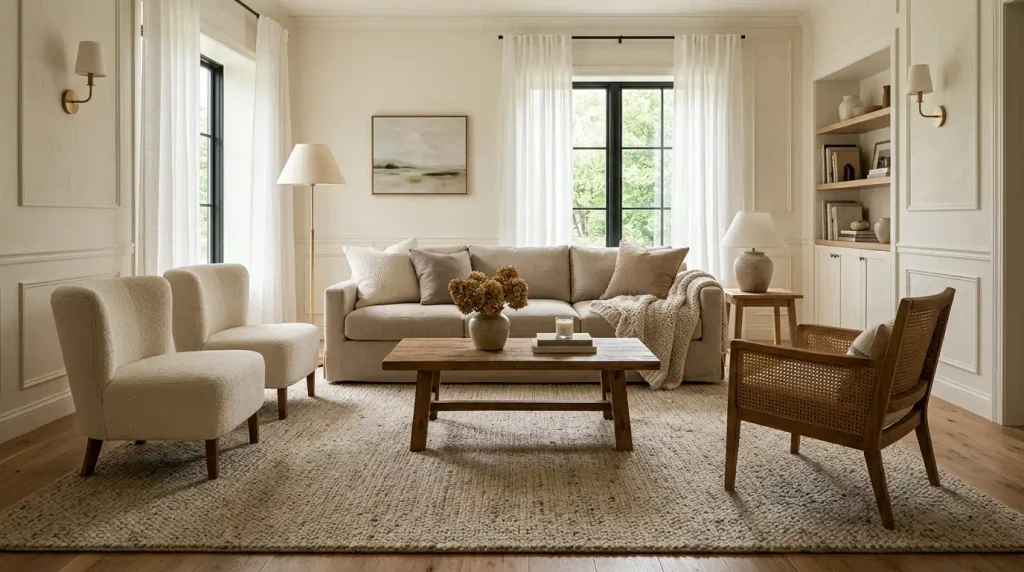
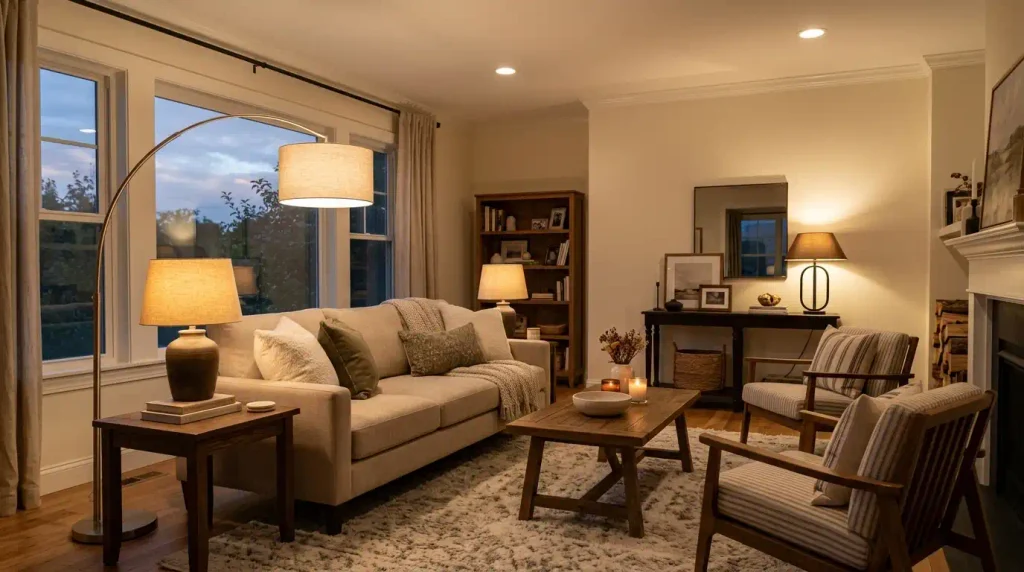
Lighting has a major impact on how comfortable a home feels. Replace overly bright lighting with several softer light sources throughout the room. Table lamps, floor lamps, wall sconces, and small accent lights can create a warm layered effect. Choose warm-white bulbs rather than cool blue-toned bulbs for relaxing spaces. Place a floor lamp beside a sofa or reading chair for both style and function. A table lamp on a console or side table can provide a gentle evening glow. Decorative lamps can also become attractive focal points. Avoid relying entirely on one ceiling fixture. Multiple light sources make the room feel more intimate. Use dimmable lighting when possible to adjust the atmosphere throughout the day.
5. Bring Indoor Plants Into the Room
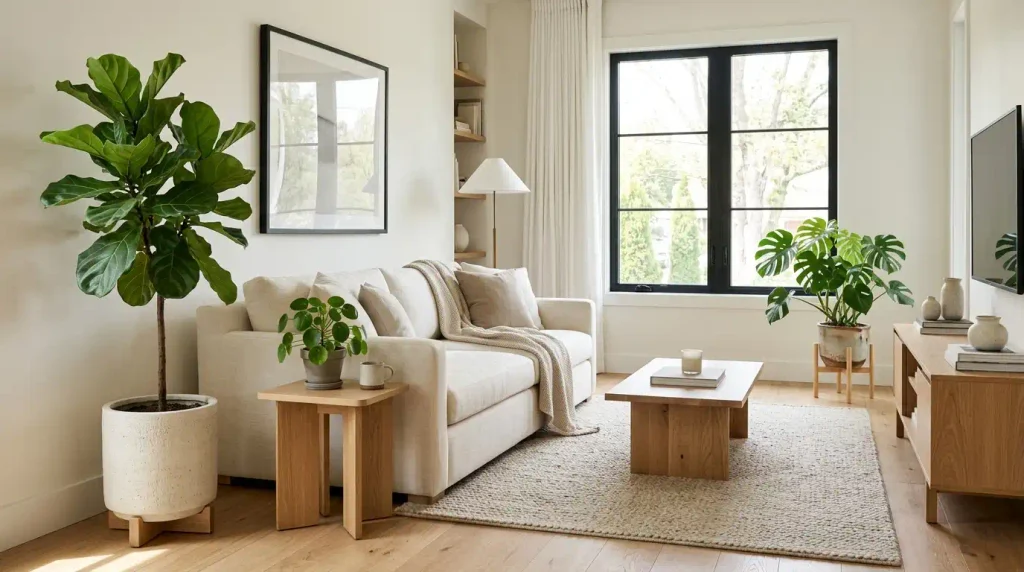
Indoor plants are a simple way to make a home feel fresh and welcoming. Large plants can fill empty corners while smaller plants work beautifully on shelves and side tables. Choose varieties that suit the amount of natural light available in your room. Place a tall plant in a simple ceramic or woven planter for a stylish statement. Smaller plants can be grouped together to create a natural display. Green foliage works particularly well with beige, white, brown, and cream interiors. Plants also introduce organic shapes that soften rooms filled with straight furniture lines. Avoid placing too many plants in one area. A few thoughtfully positioned plants can create a balanced appearance. Choose low-maintenance varieties if you have limited time for plant care.
6. Style the Sofa With Textured Pillows
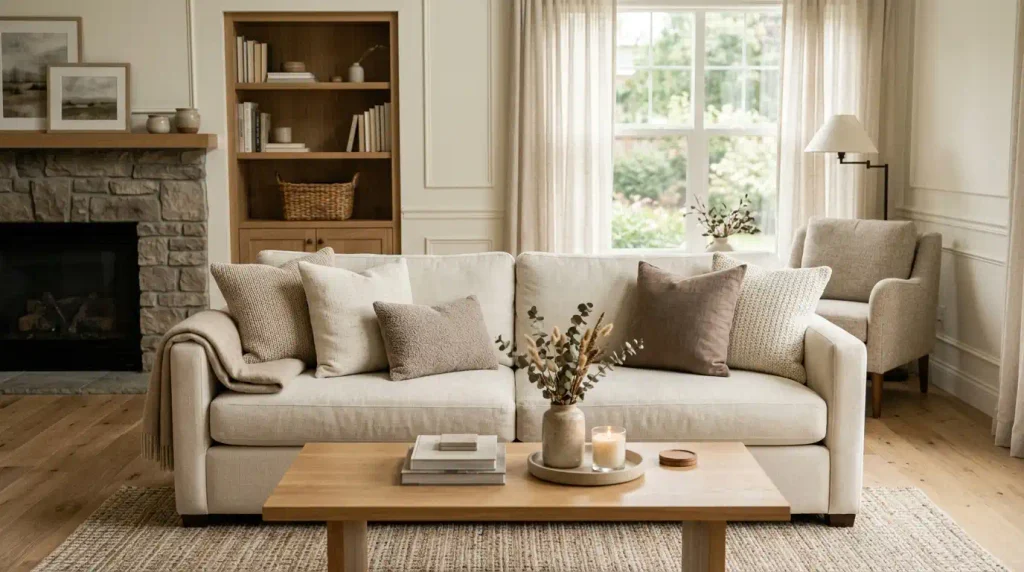
Textured pillows can make even a basic sofa look comfortable and stylish. Combine different fabrics such as linen, cotton, boucle, and knitted materials. Use several neutral shades instead of making every pillow identical. Cream, tan, beige, muted brown, and soft gray work beautifully together. Add one or two subtly patterned pillows for visual variety. Keep the pillow arrangement balanced without filling the entire sofa. Larger pillows can sit toward the back while smaller decorative cushions go in front. Choose pillow covers that can be removed and washed easily. Seasonal pillow covers can also refresh your decor without replacing the furniture. This is an affordable way to make a living room feel more personalized.
7. Decorate With Natural Wood
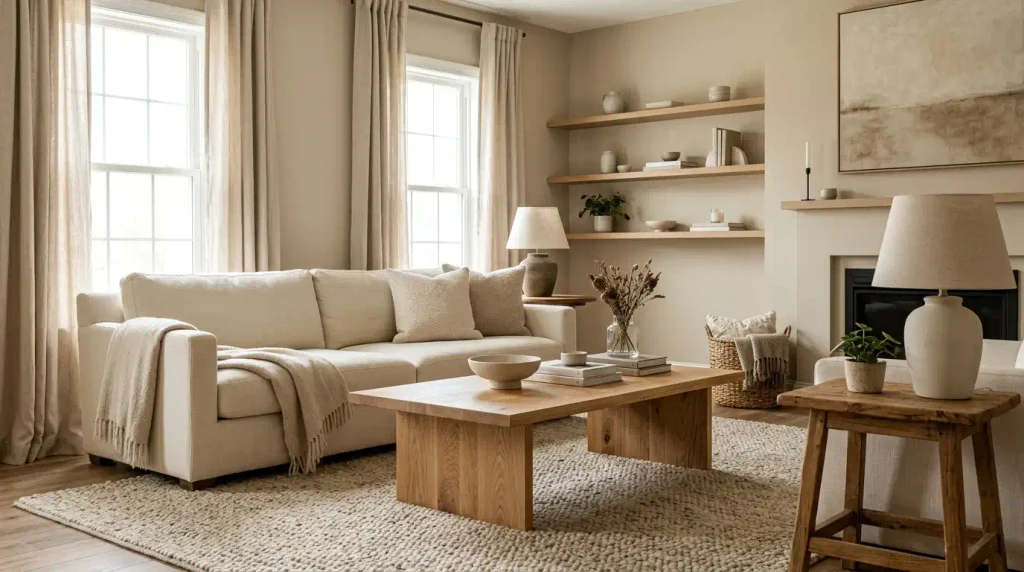
Natural wood instantly adds warmth and character to an interior. Introduce wood through coffee tables, side tables, shelves, benches, or decorative accessories. Light oak is excellent for bright Scandinavian-inspired rooms, while walnut creates a richer and more traditional appearance. Mix wood tones carefully so the room does not look mismatched. A wooden coffee table can become the central feature of a cozy living room. Open wooden shelving can provide storage while displaying books and decorative objects. Natural wood works especially well with soft textiles and neutral colors. Look for pieces with visible grain for an organic appearance. Avoid excessive glossy finishes if you want a relaxed atmosphere. A few quality wooden pieces can make a space feel timeless.
8. Create a Cozy Fireplace Area
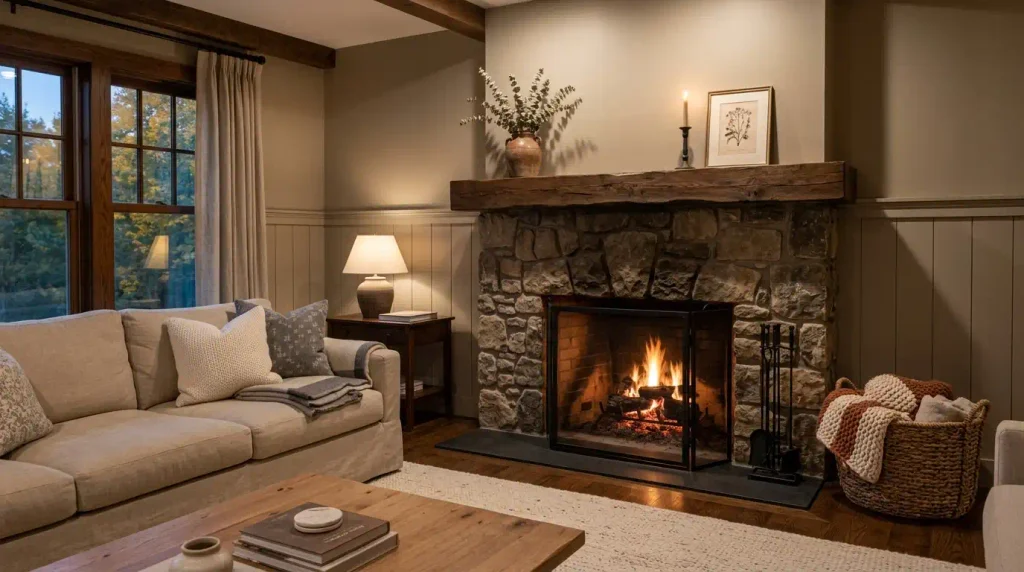
A fireplace can become the natural heart of a comfortable living room. Arrange seating so the fireplace is visible and easy to enjoy. A simple stone, brick, or painted fireplace surround can create a welcoming focal point. Add a wooden mantel with a few carefully selected decorations. Avoid overcrowding the mantel with excessive accessories. Place a comfortable rug and soft seating nearby to complete the cozy atmosphere. During colder months, warm lighting can enhance the fireplace area even when the fireplace is not in use. Neutral materials create a timeless look that works with many decorating styles. A basket filled with neatly folded blankets can add both function and texture. Keep the surrounding area open enough to maintain a clean appearance.
9. Add a Soft Ottoman or Pouf
An ottoman can provide extra comfort without taking up as much visual space as another chair. Choose a soft upholstered ottoman in a neutral fabric for a versatile appearance. It can serve as a footrest, extra seating, or even a casual coffee-table alternative. Round poufs can make a room feel softer because they introduce curved shapes. A rectangular ottoman works well with larger sectional sofas. Select durable fabrics if the piece will receive frequent use. Keep the color coordinated with your sofa and area rug. A textured fabric can make the piece more visually interesting. Position it where it does not block walking paths. Functional furniture is especially useful in smaller American living spaces.
10. Use Layered Curtains
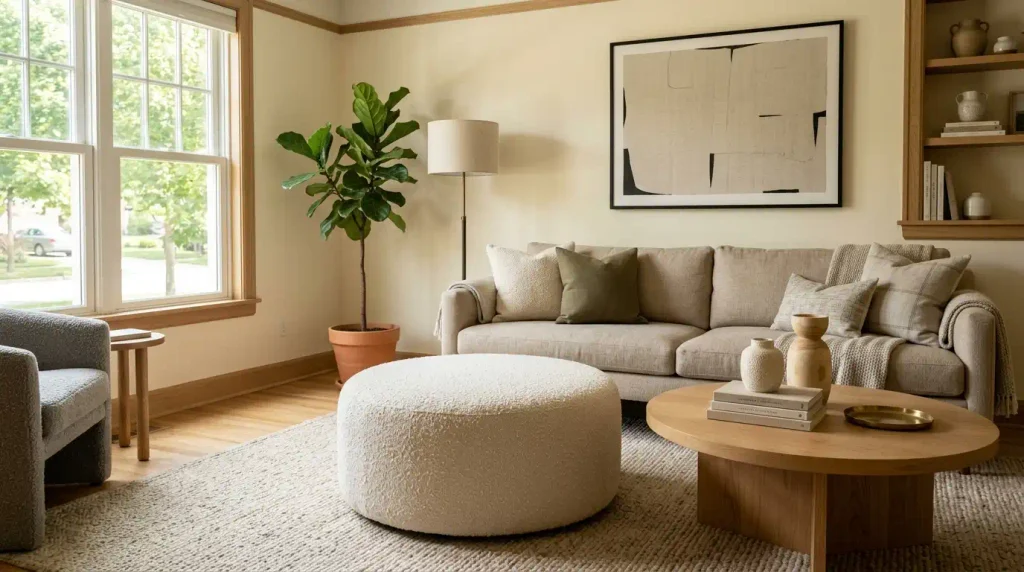
Curtains can make a room feel softer, warmer, and more finished. Choose lightweight linen or cotton curtains for a relaxed appearance. Neutral colors such as ivory, cream, and warm beige work with many interior styles. Hang curtain rods slightly above the window frame to create the impression of taller ceilings. Allow the fabric to gently reach the floor for an elegant look. Layer sheer curtains with heavier panels if you want both privacy and softness. Natural daylight filtered through sheer fabric creates a beautiful cozy effect. Avoid overly heavy curtains in small rooms because they can make the space feel closed in. Keep the curtain design simple if the room already contains patterns. Well-chosen window treatments can dramatically improve the overall atmosphere.
11. Build a Cozy Gallery Wall
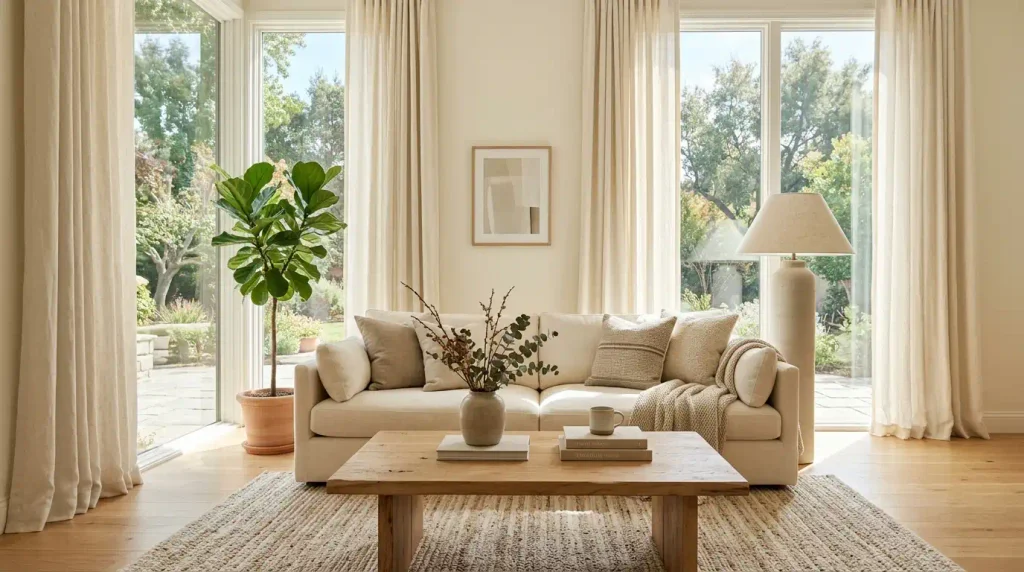
A gallery wall can make a home feel personal without sacrificing style. Choose artwork that reflects your taste, travel memories, nature, or favorite photography. For a calm look, use a consistent color palette throughout the artwork. Black, natural wood, or white frames can create a cohesive appearance. Arrange the frames on the floor first to experiment with the layout. Keep spacing relatively consistent between each piece. A mixture of artwork sizes can make the display feel more natural. Avoid placing too many pieces on one wall. The gallery wall should complement the furniture rather than compete with it. Personal artwork can make a living room feel much more like home.
12. Add a Woven Basket
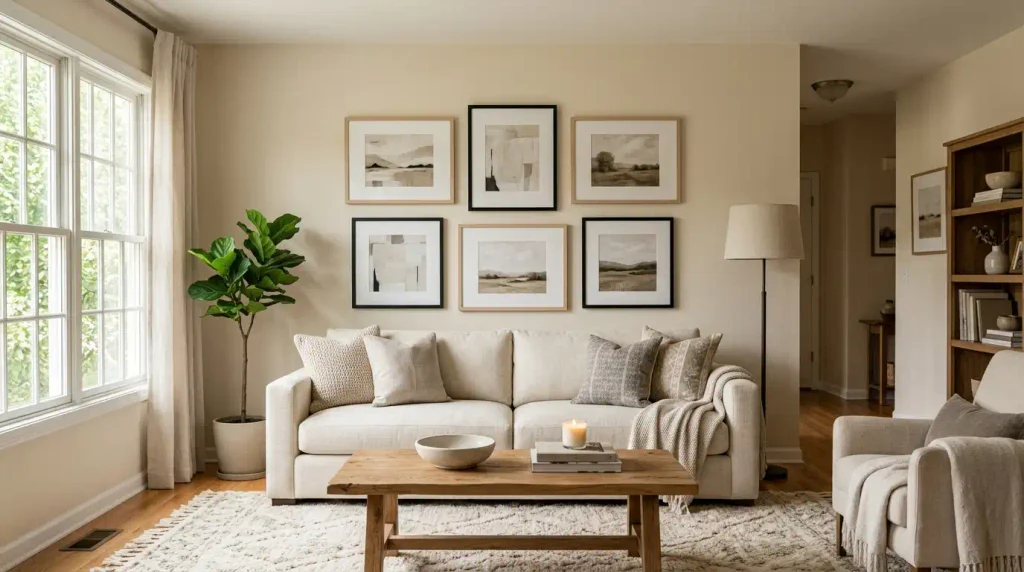
Woven baskets combine practical storage with natural texture. Use them to store blankets, pillows, magazines, or children’s toys. A large basket beside the sofa can keep throws organized while adding warmth to the room. Natural rattan, seagrass, and wicker work especially well with neutral interiors. Smaller baskets can sit on shelves or under consoles. Choose baskets with simple shapes for a modern appearance. Make sure storage baskets are large enough to be genuinely useful. Avoid filling every corner with decorative storage. One or two strategically placed baskets can be enough. Natural woven materials pair beautifully with wood, linen, and cotton. This simple addition can help keep a cozy room looking organized.
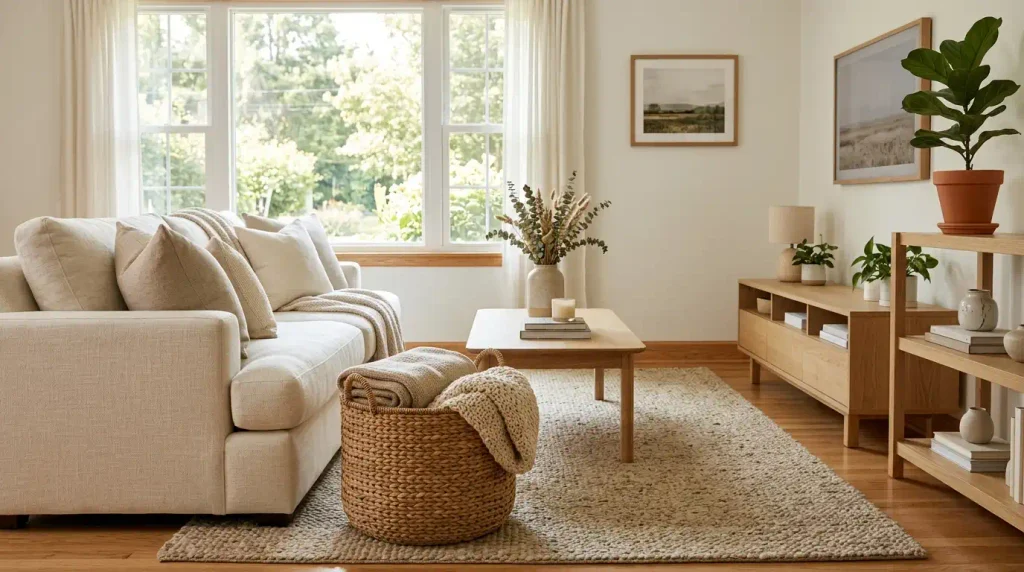
13. Create a Minimalist Coffee Table Display
A coffee table can become a stylish focal point without being cluttered. Start with a small stack of attractive hardcover books. Add a ceramic vase, a small plant, or a simple decorative bowl. Use objects with different heights to create visual balance. Keep enough empty space on the table for everyday use. Natural materials such as wood, ceramic, stone, and glass work beautifully in cozy interiors. A small tray can keep several objects organized. Change seasonal accessories throughout the year for a fresh appearance. Avoid filling every inch of the tabletop. A restrained arrangement looks sophisticated while remaining practical.
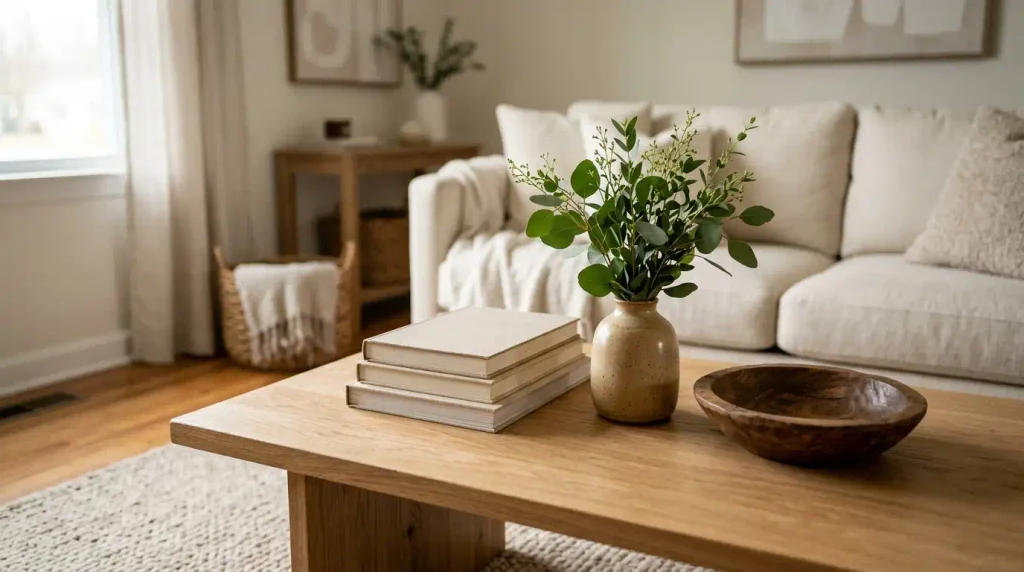
14. Choose Comfortable Sectional Seating
A comfortable sectional can make a living room feel perfect for relaxing with family and friends. Choose deep seating with supportive cushions for everyday comfort. Neutral upholstery makes it easier to change accessories throughout the year. A large sectional works especially well in open-plan American homes. Add several pillows and one or two blankets for a softer appearance. Make sure the sectional does not overwhelm the room’s walking paths. A U-shaped or L-shaped arrangement can help define an open living area. Consider performance fabrics if you need something durable and easy to maintain. Pair the sectional with a large area rug to visually anchor it. Comfortable seating should always remain the priority.
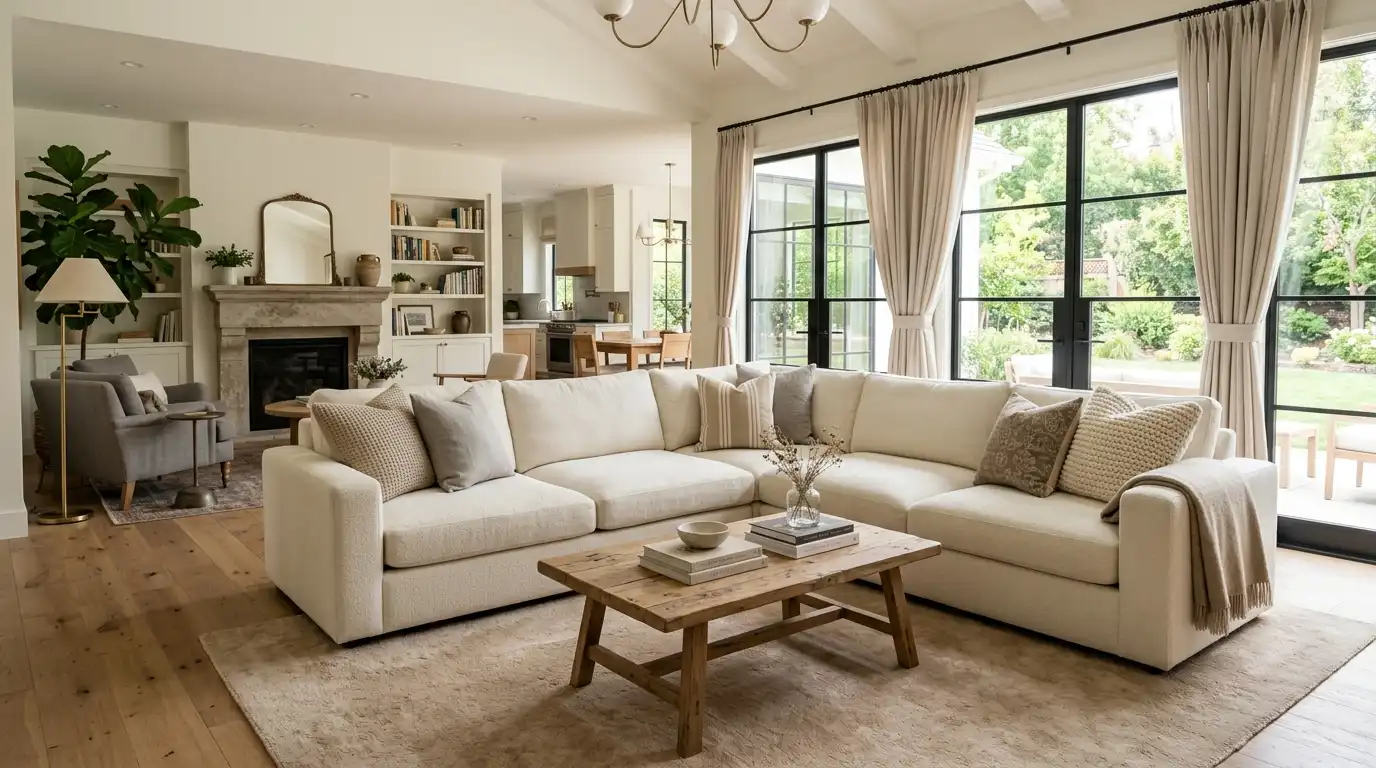
15. Use Earthy Color Accents
Earthy colors can make a room feel grounded and relaxing. Introduce shades such as terracotta, olive green, warm brown, sand, and muted rust through small accessories. You do not need to repaint the entire room to introduce these colors. Pillows, blankets, artwork, vases, and small rugs can provide subtle color. Pair earthy tones with cream or beige to maintain a bright atmosphere. Natural wood complements these shades beautifully. Keep the number of accent colors limited so the room remains cohesive. Muted colors tend to feel more relaxing than highly saturated shades. Seasonal accents can easily be switched as your decorating preferences change. Earthy colors are particularly effective in rooms designed around natural materials.
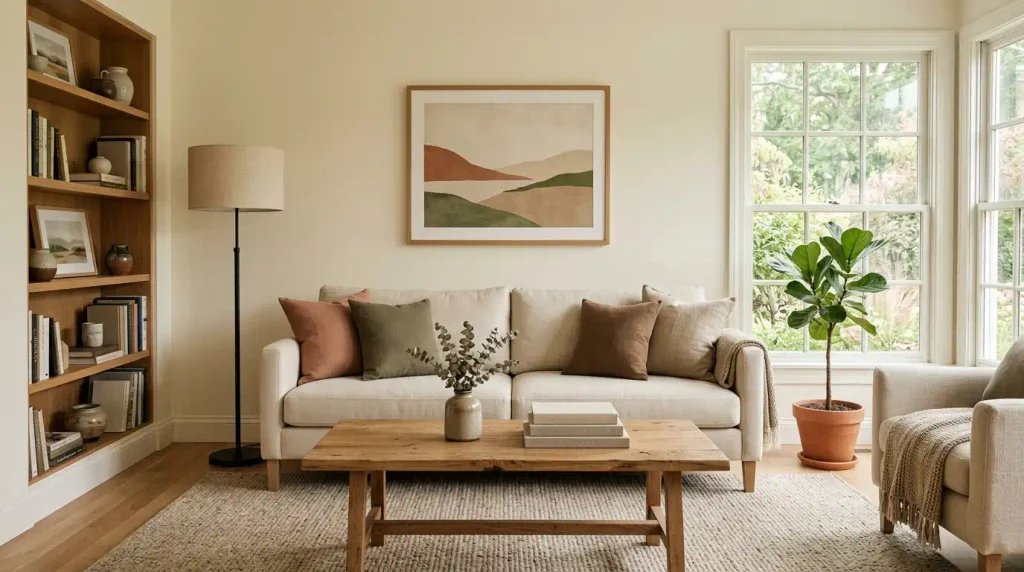
16. Make the Bedroom Extra Comfortable
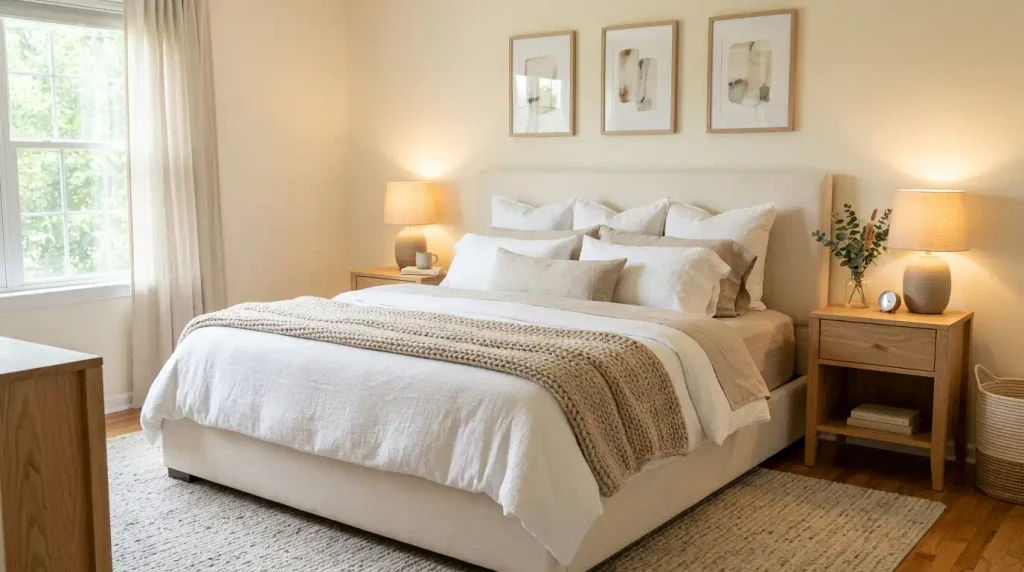
A cozy home should include a bedroom that feels peaceful and inviting. Start with soft bedding in breathable natural fabrics such as cotton or linen. Layer a duvet, quilt, and lightweight throw for depth. Use two or three different pillow sizes rather than excessive decorative pillows. Warm bedside lamps can create a relaxing evening atmosphere. Natural wood nightstands add warmth and visual balance. Keep bedroom colors soft and calming. A textured rug beside the bed can make mornings more comfortable. Simple artwork can add personality without creating visual clutter. Keep surfaces organized to maintain a peaceful environment. The overall goal should be comfort, simplicity, and restful design.
17. Design a Cozy Entryway
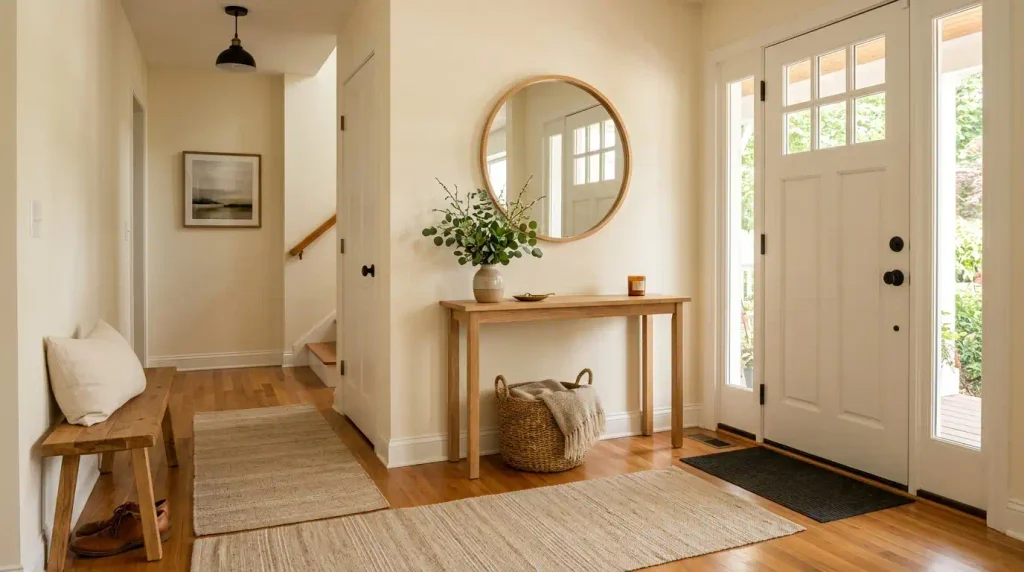
The entryway creates the first impression of your home. Keep it welcoming while making sure it remains practical for everyday use. Add a narrow wooden console or simple bench if space allows. A small mirror can make the entryway feel brighter and more spacious. Use baskets for shoes, scarves, or other daily essentials. A runner rug can add warmth and define the entry area. Add one indoor plant or a small vase for a natural touch. Keep decorative accessories limited so the area does not become cluttered. Hooks can provide convenient storage for coats and bags. Choose materials and colors that coordinate with the rest of your home. A tidy entryway can make the entire home feel more organized.
18. Add a Small Home Coffee Station
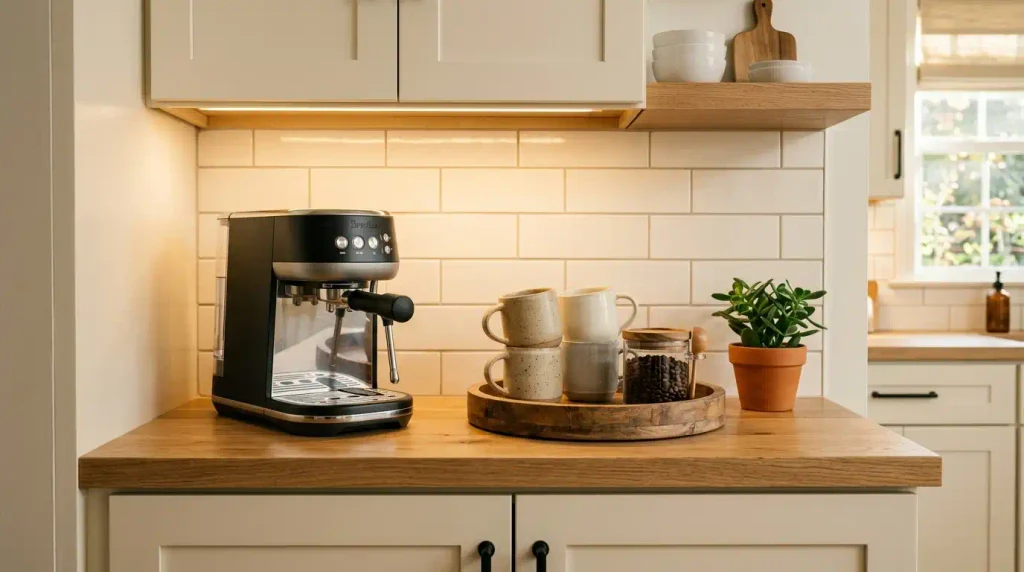
A small coffee station can make your home feel especially welcoming. Choose a compact counter, cabinet, or dedicated shelf for your coffee setup. Arrange a coffee maker, mugs, coffee canister, and a small tray neatly together. Natural wood shelves can create a warm farmhouse-inspired appearance. Neutral ceramic mugs can keep the area visually cohesive. Add a small plant or framed artwork for personality. Make sure the station remains functional and easy to clean. Avoid overcrowding the counter with unnecessary accessories. A simple setup can work in a kitchen, dining area, or small corner. This idea is particularly useful for creating a cozy morning routine.
19. Mix Modern and Vintage Decor
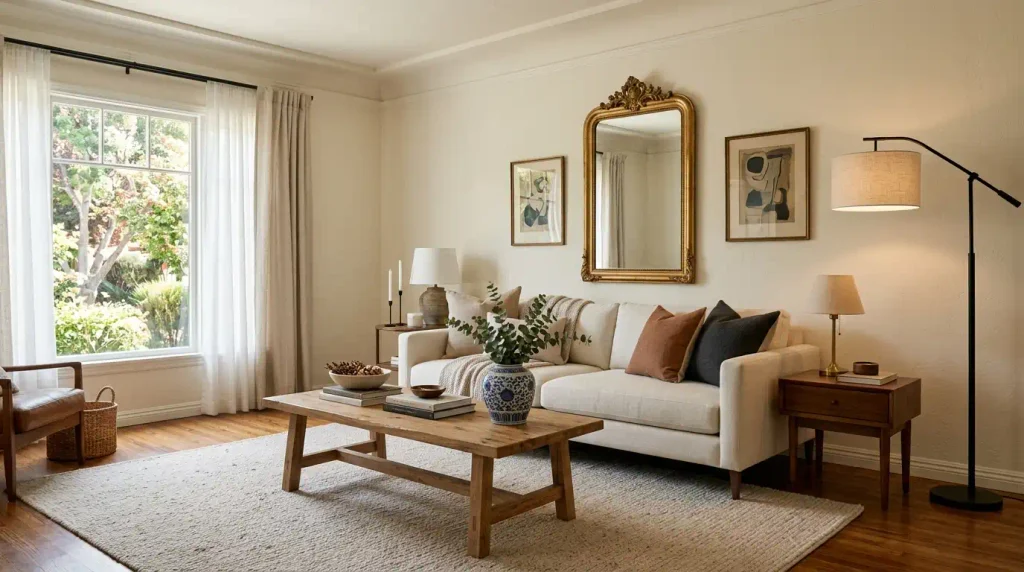
Combining modern and vintage pieces can make a home feel unique and collected over time. Start with a modern sofa or contemporary lighting fixture as the foundation. Add vintage-inspired furniture, antique-style frames, or traditional decorative objects. Natural wood and aged finishes can soften modern spaces. Avoid making every item from the same design period. The contrast between old and new creates visual character. Keep the color palette consistent so different pieces feel connected. Vintage books, ceramic pieces, mirrors, and small furniture can add personality. Choose meaningful-looking pieces rather than filling the room with random antiques. The result should feel comfortable, personal, and naturally collected.
20. Keep the Space Clutter-Free
One of the most important cozy home ideas is maintaining a clean and organized environment. Too many objects can make even a beautiful room feel stressful. Keep frequently used items accessible while storing unnecessary objects out of sight. Use baskets, cabinets, shelves, and storage ottomans to organize everyday belongings. Leave some empty space on tables and shelves to create visual breathing room. Choose a few favorite decorative pieces instead of displaying everything you own. Regularly remove items that no longer serve a purpose. A tidy room also makes textures and furniture more noticeable. Keep surfaces clean and arrange furniture so walking paths remain open. The result is a home that feels both stylish and genuinely comfortable.